If you have back pain that keeps coming back, or sciatica that shoots down your leg, you have probably heard someone mention “spinal decompression.” The big question is simple: what is it, and what does it actually do?
At Life Alive Chiro, non-surgical spinal decompression is a conservative, non-invasive therapy designed to reduce pressure on irritated spinal discs and nerves. The goal is to create a better environment for healing, especially when pain is tied to disc problems like bulging, degenerating, or herniated discs.
What is non-surgical spinal decompression?
Non-surgical spinal decompression is a form of motorized traction that gently stretches the spine. That stretch changes the force and position of the spine, helping take pressure off the spinal discs (the gel-like cushions between the bones of your spine).
One of the key ideas behind decompression is something called negative intradiscal pressure. In plain terms, that means the decompression table can create a lower-pressure environment inside the disc, which may help:
- encourage bulging or herniated disc material to retract
- reduce pressure on nearby nerves
- support movement of fluids and nutrients into the disc area
Lumbar Decompression Overview
How decompression therapy helps disc-related pain
Disc issues can irritate nearby nerve roots and trigger symptoms like sciatica, tingling, or numbness. Decompression therapy is designed to reduce the “pinch” effect by lowering pressure and improving spacing and motion.
Your reference materials describe it as a therapy intended to relieve pain and promote an optimal healing environment for disc conditions, using gentle stretching to reduce disc pressure.
What happens during a decompression session?
Most people are surprised by how straightforward the visit feels.
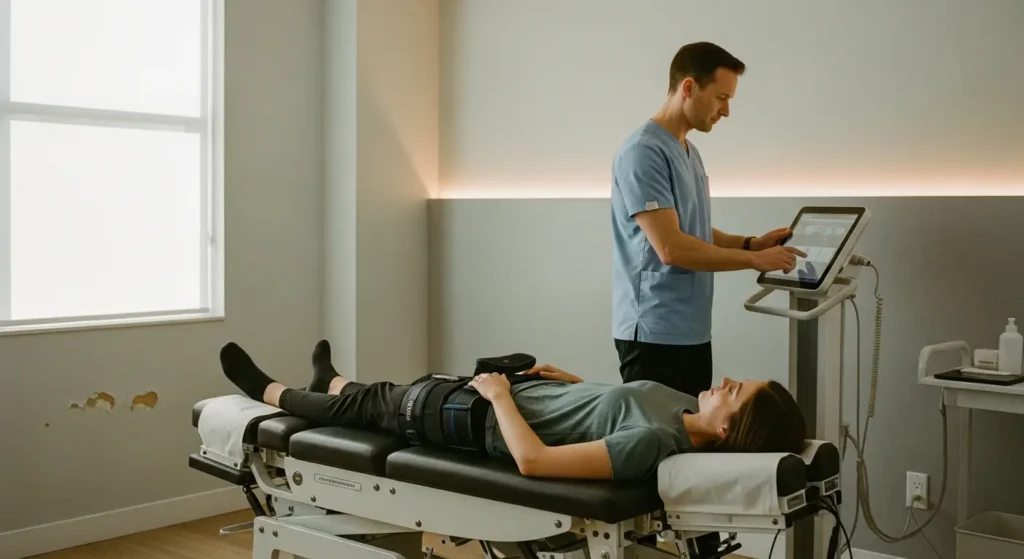
During a session, you stay clothed and lie on a motorized decompression table. A harness is typically placed around the hips (and sometimes the trunk), and the table applies controlled, targeted pulling and relaxing cycles.
Your docs describe the session as intermittent stretching and relaxing in a controlled manner, tracked by a computerized program.
Many patients describe it as a strong stretch, not pain. In the overview document, the expected sensation is stretch or lengthening, not pain during or after.

Common conditions decompression may help
Decompression is often considered when pain and symptoms match disc and nerve irritation patterns, including:
- back pain or neck pain
- sciatica symptoms like pain, weakness, or tingling into the legs
- numbness
- bulging, herniated, or protruding discs
- degenerative disc disease
- spinal stenosis
- discogenic pain (pain originating from the disc)
Spinal Decompression Therapy
How long does it take?
Every plan is individualized, but your docs provide a common framework: 12 to 24 sessions over four to eight weeks, with each session typically around 15 minutes in that protocol.
A smart next step
Decompression is not a “one-size-fits-all” solution. The right first step is a proper evaluation to see whether your symptoms and history match what decompression is designed to address.
Want to find out if decompression fits your case? Schedule a consult with Life Alive Chiro and ask about a decompression evaluation and plan.